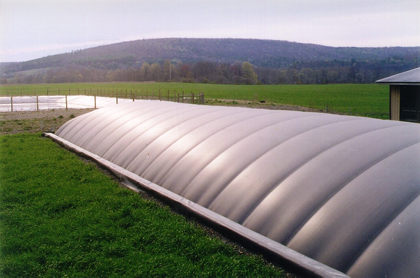
 AGRICULTURAL PLUG-FLOW EXAMPLE
Covered plug-flow / DVO-type
Long, covered digester configurations commonly used in agricultural applications. Feedstock characteristics, bedding and grit can influence where material settles along the flow path.
Digesters We Assess
Should this digester be considered for a cleanout?
Dairy and livestock digesters, including facilities where sand, grit or bedding may contribute to accumulation.
Digesters receiving food-processing residuals, commercial food waste and other organic feedstocks.
Facilities receiving source-separated organics and mixed organic streams where contaminants may be present.
Digesters supporting renewable natural gas, biogas utilization and combined heat and power facilities.
Anaerobic digestion assets at wastewater treatment facilities where solids and grit accumulation may affect usable volume.
Mixed plug-flow / DVO-type systems, CSTR and other anaerobic digester configurations, subject to available information and access.
Common digester configurations
AGRICULTURAL PLUG-FLOW EXAMPLELong, covered digester configurations commonly used in agricultural applications. Feedstock characteristics, bedding and grit can influence where material settles along the flow path.
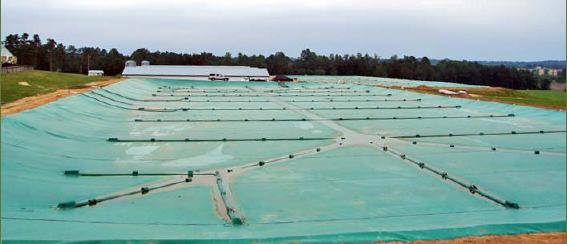 COVERED LAGOON EXAMPLE
Large-volume covered basins can accumulate settled material over time. Available depth, solids distribution and operating history are important context when considering usable capacity.
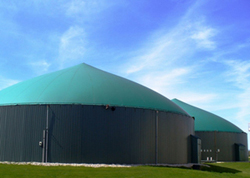 COMPLETE-MIX TANK EXAMPLE
Continuously mixed tank systems rely on effective mixing and usable volume. Changes in solids behavior, mixing or pumping can be useful indicators for further investigation.
HRT & usable volume
Hydraulic Retention Time (HRT) is the average time material remains in the digester. In simplified terms:
If settled material occupies part of the intended working volume, the effective usable volume—and therefore the effective retention time—may be lower than the original design basis. HRT alone does not prove a cleanout is required, but it is one useful piece of the assessment.
DigesterCheck is Canada-focused, with initial emphasis on Ontario, Alberta, British Columbia and Québec.
Tell us about your digester →